Week 7
Algorithmic Thinking

What is an algorithm?
A specific process with enough detail to allow the instructions to be followed. […] just a precise way of explaining how to do something.
Reas, et al. (2010, p.13)
Algorithms can be defined as having four qualities.
- There are many ways to write an algorithm.
- An algorithm requires assumptions.
- An algorithm includes decisions.
- A complex algorithm should be broken down into modular pieces.
Reas, et al. (2010, p.13)


The real tools of GenArt, the underlying constants to the various tools you can use, are the algorithms. Algorithms are a part of the natural world; they have a universality that transcends medium. So while the systems capable of creating GenArt change over time, evolving as technology evolves, the algorithms remain the same.
Generative art : a practical guide using processing
Pearson (2011, p.9)
To be able to call a methodology generative, our first hard-and-fast rule needs to be that autonomy must be involved. […]
The second hard-and-fast rule therefore is there must be a degree of unpredictability.
Generative art : a practical guide using processing
Pearson (2011, p.6)
You create a system, model it, nurture it, and refine it, but ultimately your ownership of the work produced may be no more than a parent’s pride in the work of their offspring.
In addition to the programming, the human contributes one other important skill: aesthetic judgment.
Generative art : a practical guide using processing
Pearson (2011, p.4)
disrupting algorithms of control and experiment[ing] with new ways of dismantling the cis-tem.
Shabbar (2018, p.209)
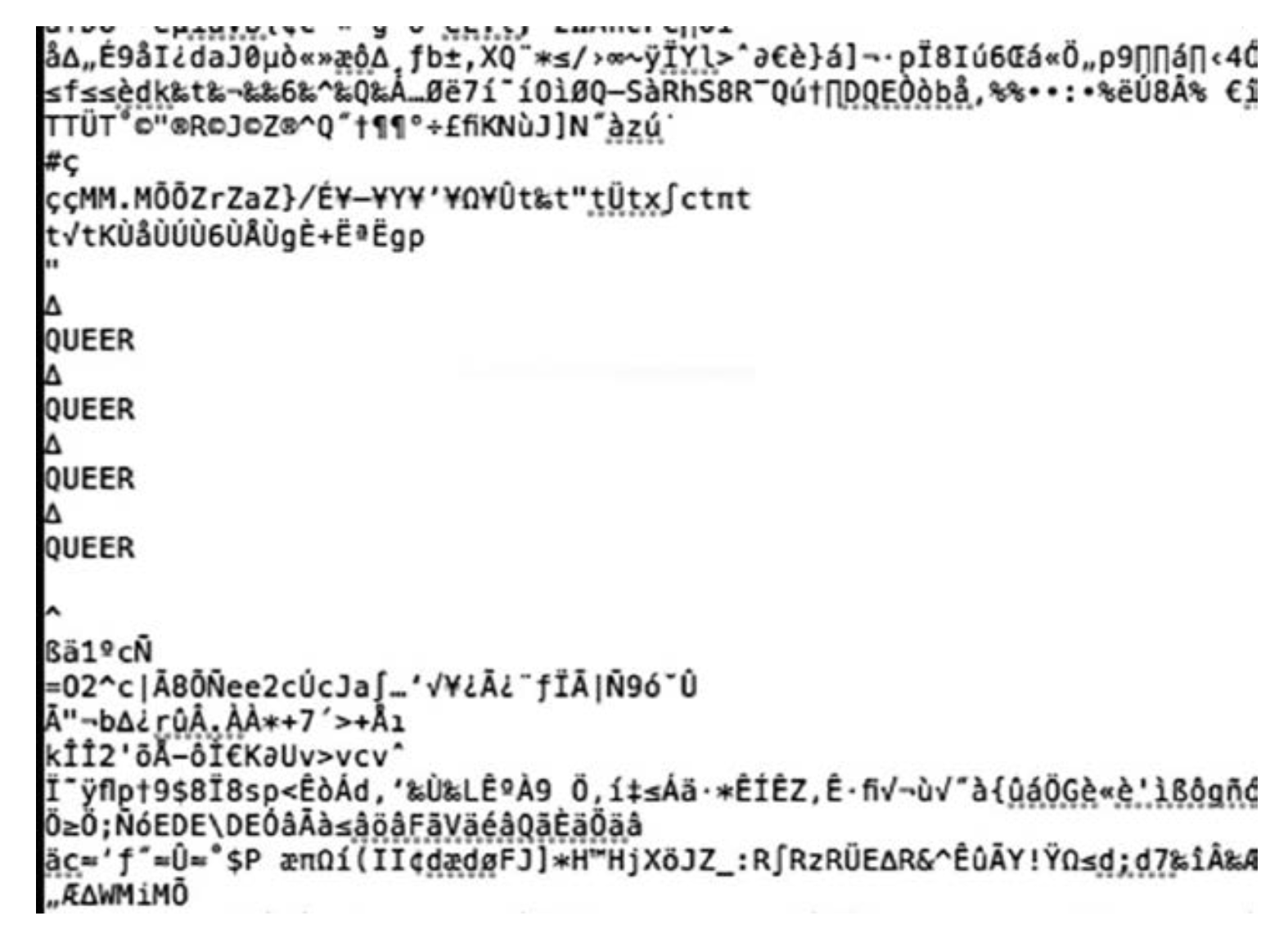
JPEG is not just a file format, but an algorithm to compress and decompress image data (actually, the file format is called JPEG JFIF). […] If we still see an image, the JPEG algorithm has successfully rendered it.
Glitch && Human/Computer Interaction
Daniel Temkin, 2014
[Glitch art] is a more demented form of generative art: zombie algorithms stripped of their ordinary purpose or built with no clear purpose at all, set loose to twist data into strange new patterns, or to expose side-effects unwanted by their original designers
Glitch && Human/Computer Interaction
Daniel Temkin, 2014
- databending: Shabbar and Rosa Menkman
- Pixel Sorting: Kim Asendorf
- Glitch Sorting: Paul Hertz
There are many ways to write an algorithm…
and many ways to disrupt the system

Let us reverse to Week 3
Video tiles p5 sketch
Easing with sin()
Simple easing with sin() II
Polar Coordinates - Circular Motion
Polar Coordinates - Circular Motion Scale
Recursion: the repeated application of a rule to successive results.
Shiffman, Nature of code
Basic recursive circles and boxes
More on recursion
random() vs noise()
Do your assignments from the GitHub page and upload them on your process blogs!